Khiva, a historic city in Uzbekistan, offers a range of experiences that reflect its rich cultural heritage. One of the most significant sites to visit is the Itchan Kala, the inner town, which is a UNESCO World Heritage site. Walking through its narrow, winding streets allows visitors to appreciate the stunning architecture and intricate tile work that characterizes the region.
Another important landmark is the Kalta Minor Minaret, known for its striking turquoise tiles and unique design. This minaret, although unfinished, serves as a symbol of Khiva and provides insight into the city's architectural history. Nearby, the Kunya-Ark Fortress is worth exploring, as it was once the residence of Khiva's rulers and offers a glimpse into the political history of the area.
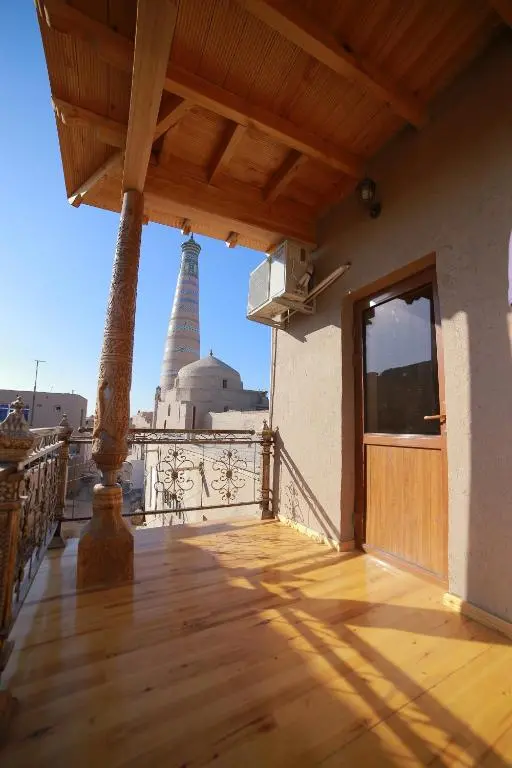
The Tash Khauli Palace is another highlight, showcasing beautiful courtyards, ornate woodwork, and traditional Uzbek art. Visitors can also explore the Islam Khoja Complex, which includes a mosque and a minaret, both of which are significant for their architectural beauty and historical importance.
For those interested in local crafts, the Muhammad Amin Khan Medressa is a notable spot. This medressa is not only an educational institution but also a place where artisans display their work, allowing for an appreciation of traditional craftsmanship.
The Juma Mosque, with its impressive wooden columns and serene atmosphere, offers a peaceful retreat and an opportunity to reflect on the city's spiritual heritage.
As the day winds down, taking a stroll along the city walls provides a different perspective of Khiva, especially at sunset when the landscape is bathed in warm light. Engaging with local cuisine at traditional restaurants can enhance the experience, offering a taste of regional flavors.
In summary, Khiva presents a blend of architectural marvels, historical sites, and cultural experiences that invite exploration and appreciation of its unique heritage.
 English
 Dansk
Dansk Deutsch
 Español
 Français
 Italiano
 Nederlands
 Norsk
Norsk Português
 Polski
 Svenska
 日本語
日本語 한국어
한국어 简体中文
简体中文 العربية